Learning games
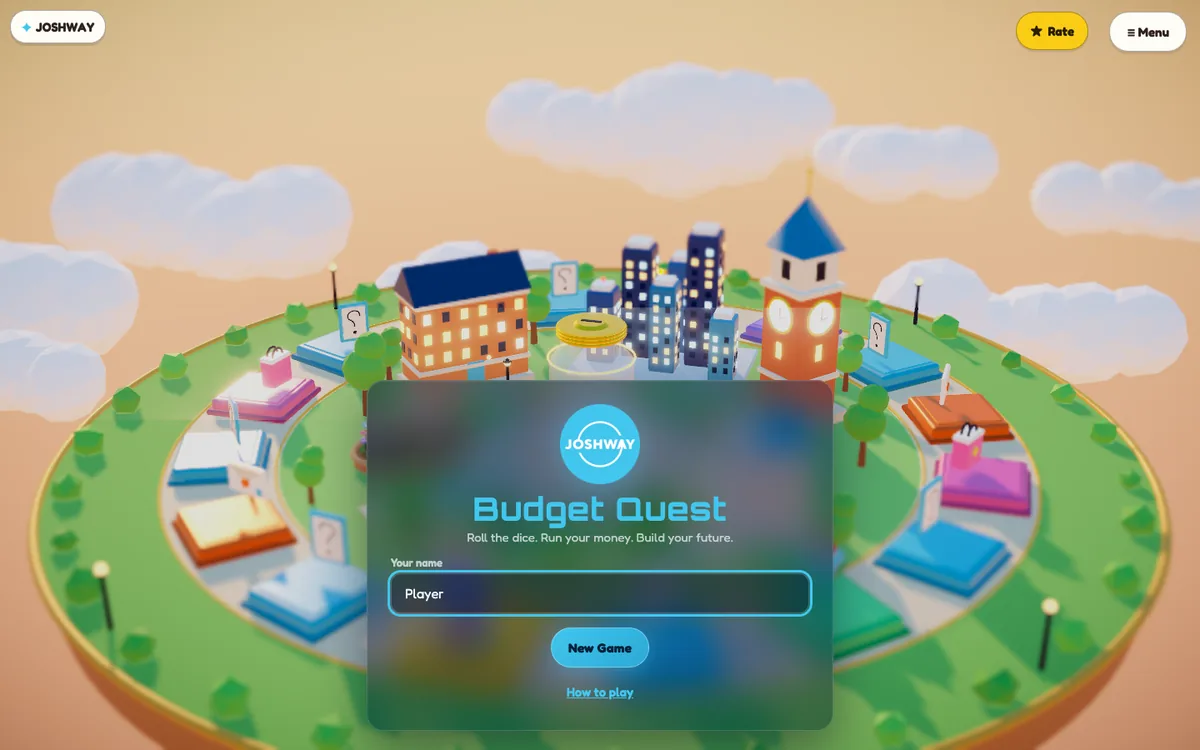
Quiz races, board-style money sims, and decision games where the right answer moves you forward, with team modes for a classroom and solo modes for practice.
Educational game development · Browser 3D · Branded games
We build browser 3D games that teach a skill or carry a brand. They load from a link on a phone, a school laptop, or a desktop, with nothing to install and no account to create. Two live examples: the JOSHWAY arcade at joshway.app and the Balaveda games at play.balavedians.com.
Why the browser
App stores add review time, a download step that loses players, and device rules that block installs on school and work machines. A browser game skips all three. Share a link in a newsletter, print a QR code on a poster, or post it in a class assignment, and players are in the game in seconds.
What we build
Every game we build has a purpose beyond fun: teach a skill, start a conversation, or bring people back to a brand.
Quiz races, board-style money sims, and decision games where the right answer moves you forward, with team modes for a classroom and solo modes for practice.
Short, replayable games that star your product, are built to be shared, and send players back to your shop.
A home that ties a collection together, with shared navigation, ratings, and one brand across every title.
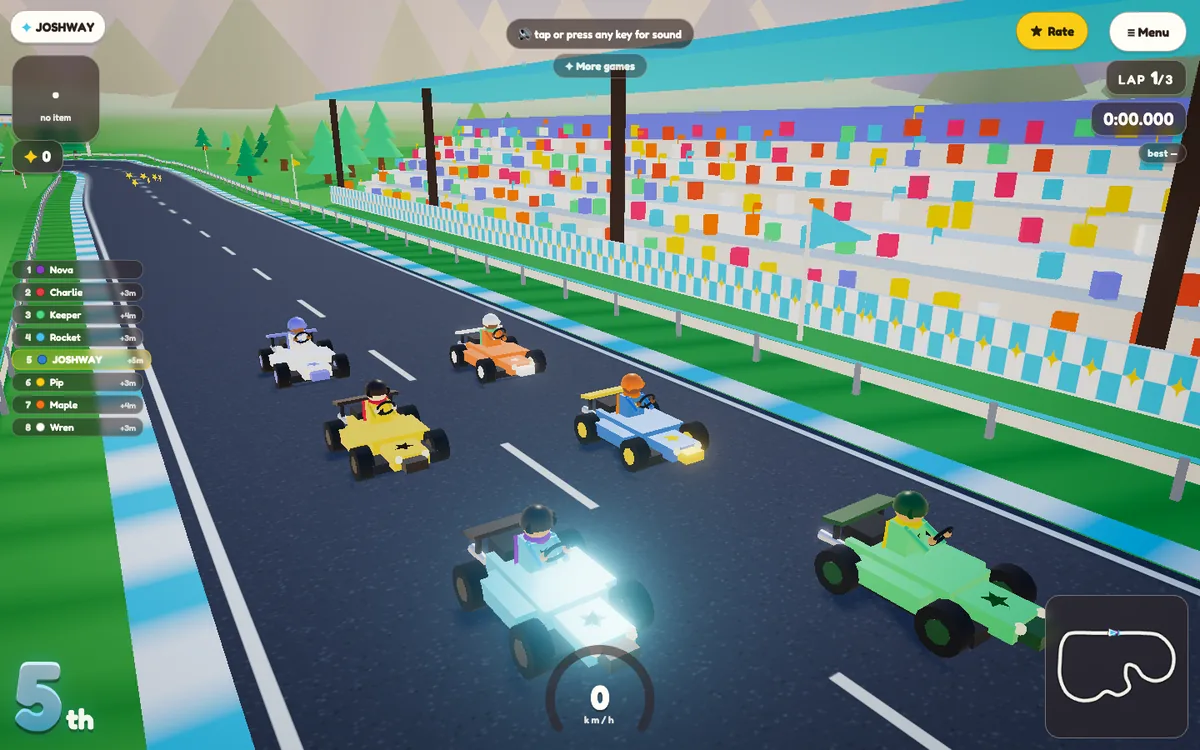
A playable 3D experience as the front door of a site, like the kart racer that opens joshway.app.
Daily challenges, missions, and leaderboards that give players a reason to come back tomorrow.
Touch controls designed for phones first, with keyboard and mouse support on laptops and desktops.
Design approach
The most common mistake in educational games is a quiz glued onto an unrelated game. Players learn to click through the questions to get back to the fun. We design it the other way around.
Real-time 3D with Three.js and WebGL, React for menus, quizzes, and scoring overlays, Vite builds, and static hosting on Vercel or Cloudflare Pages.
Case studies
Both collections are live and free. Open them on your phone.
Youth organization
A free arcade at joshway.app with a 3D kart racer on the home page and learning games about budgeting, money skills, and digital wellness.
Consumer brand
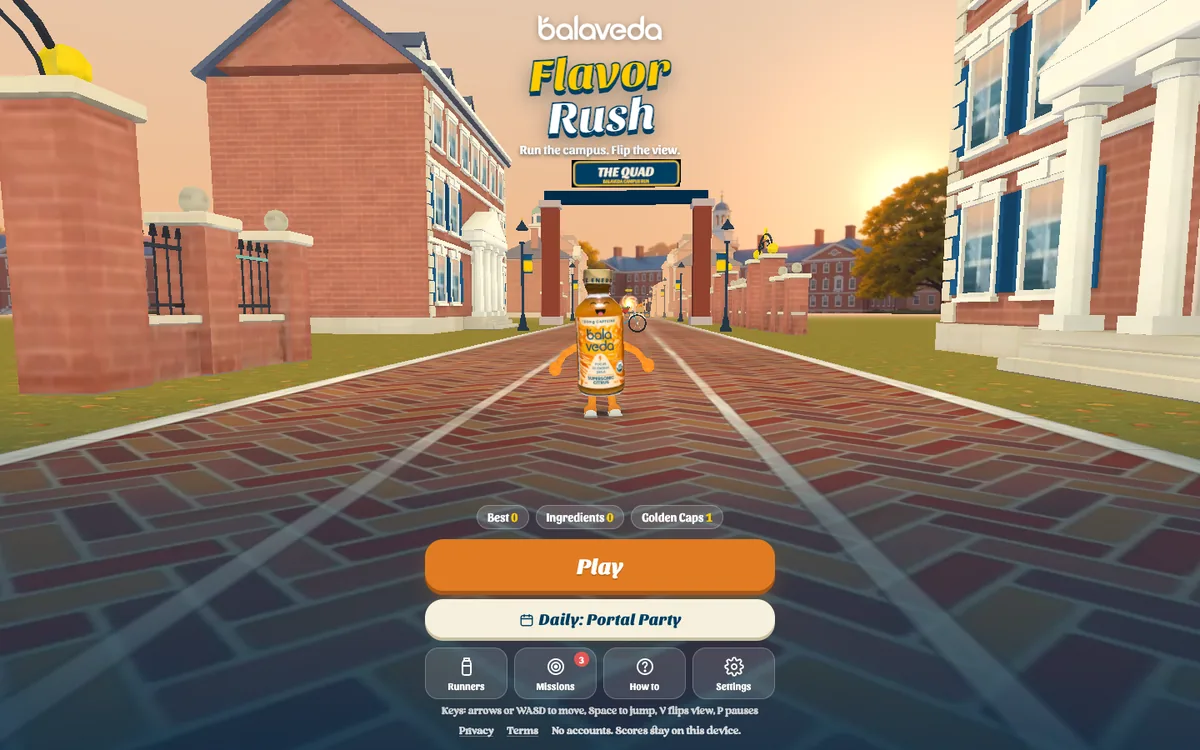
Seven free branded games at play.balavedians.com starring Balaveda bottles, made for phones with no download, accounts, ads, or cookies.
Common questions
No. Our games run in the web browser from a link or a QR code. There is no app store, no install, and no account to create unless your program needs one.
We design for modest hardware first, with stylized art and a performance budget set for the slowest devices in your audience. Any current browser with WebGL support, which covers modern phones, tablets, and laptops, can run them.
By default, no. Our live games use no accounts, keep scores on the device, and count plays anonymously. If your program needs classes, logins, or progress reports, we scope that with your privacy requirements.
Yes. Send us a worksheet, a lesson plan, a slide deck, or an existing prototype, and we will propose game concepts built around it.
Yes. Branded games star your product, link back to your shop, and give people a reason to share a link with a friend. The Balaveda games are a live example.
It depends on the number of games, levels, art, and content. We quote a fixed price after a short concept phase, so you know the cost before the build starts.
Make it playable
Tell us who it is for and what they should learn or feel. We will come back with game concepts, a scope, and a price.